Sunday, February 5, 2017

Jeff Parker- The New Breed


The New Breed
Jeff Parker
International Anthem Recording Co. 2016

Listen on Spotify


After listening to Jeff Parker’s solo LP, The New Breed, there seems to be an immediate conflict. The sound of this record (we’ll try to figure out what exactly it is in a moment) seems either strangely forward thinking or at minimum comfortably present. On the other hand, the photo that graces the album’s cover couldn’t be more dated, fading and frayed down the middle. Digging deeper, this strange duopoly means a whole lot more than meets the eye. On one hand you have Parker, a guitar aficionado, and melting pot of musical influences that flat-out rejects easy classification. On the other, you have what turns out to be a photo of Parker’s father from years ago, standing outside his clothing store named, you guessed it, The New Breed. As it turns out, we’re shown something very important when it comes to understanding Parker the musician. His album is exactly what this juxtaposition says it is- a display of new and old, his roots and his future, and a combination of pieces that don’t sound like they’d fit but somehow coalesce into the jazz-guitar record you never knew you’d love.

Obviously, these varied parts didn’t just show up on an album released during the third decade of Parker’s professional career. Having played in a myriad of groups and bands over the years, most notably Tortoise, Isotope 217, and the Chicago Underground Duo, he would be nothing without the collaborations and connections he’s established, and each one offers something unique to Parker’s personal style, as evidence by this particularly diverse project. In fairness, they would be nothing without him, either. Parker can stake claim as one of the most important figures in the blossoming Chicago jazz and avant-garde movement of the late 90s, cemented by the enormous step forward on Parker’s first Tortoise record, the stellar TNT released in 1998. Parker helped usher in sweeping jazz themes and daring experimentation that followed the band for the rest of their career. To dwell in past achievements would be an unforgiveable mistake, however, and The New Breed shines a light on the brilliance of Parker’s creativity when given the reigns to a solo album.

To begin, let’s start with what this record is not. It isn’t the brass-centric, briskly-paced traditional jazz that your (and his) parents listened to. Nor is it simply a twenty-first century Tortoise record, eschewing the trademark electronic-twinged post-rock for something far, far, more mellow. His obsession with percussion remains; the overbearing drum kits come second in prominence only to Parker’s perfectly-tuned guitar. Overall, it’s completely unassuming, but certainly far from daring. Somehow, he manages to turn the tempo down and his pedals and effects up, all while maintaining his reputation for groovy jamming in a slightly more confined space. In other words, a crawling bassline, scattered snare drums, and an electric guitar at the forefront. Just what you expected to carry the torch for modern jazz-fusion, right? Thankfully, Parker himself can summarize much more simply. “I’m mainly a guitar player. I like to make music in many different ways. I think music opens doors.” Yeah, what he said.

The opener, “Executive Life”, brings those words to fruition and shows that he means business, handing the keys to Josh Johnson (Esperanza Spalding, Herbie Hancock) by way of cloudy saxophone timbres. As the song progresses behind moody keys, Parker’s guitar reverberates in the background, making way for improvisation. This technique- pairing jazz instruments with delay effects and allowing the percussion section to keep things organized- bears semblance to experimental icon Miles Davis’ Bitches Brew, a revolutionary output from 1970. Later on, “Here Comes Ezra,” and “Visions” prove to be far more delicate (spare one saxophone outburst on the former), an ethereal texture meandering for the better part of seven minutes before seguing into the album’s highlight.

“Jrifted,” finds Parker in his truest, best jam session. An Aretha Franklin sample interrupts throughout, and shimmering cymbals shutter behind delightfully contained improvisation. Bassist Paul Bryan soon emerges from the subtleties of the background, creating precious moments intertwining with Johnson brass. The haze of the record has never seemed foggier, providing the perfect entrance for Parker’s newfound Los Angeles R&B vibes. His ambient guitar wobbles and settles into a welcomed soundscape of subdued bliss; a feeling that continues onto the fuzzy, synth-laden track that follows.

Avoiding predictability, Parker throws two curveballs to finish the record. First comes the album’s quickest hitter, “Get Dressed,” which reintroduces the R&B influences, only this time in tandem with a frenetic rhythm section. Head-nodding and foot-tapping soon give way to the warmth and smoothness of the only voice that appears throughout: Parker’s daughter, Ruby. “He told me the end was coming/ I responded that’s a cliché,” she coos twice, each utterance sandwiched between the most organized jazz the album has to offer. She was right, and before long, the beat stops, Parker takes his foot off the pedal, and the coolness of the last thirty-some-odd minutes is left to ruminate.


In the end, it isn’t the presence of a saxophone or a particular guitar tuning that preserves the “jazz” element in whatever hyphenated term is used to describe Jeff Parker’s playing style, and more specifically, the album. It defies classification and combines the most seemingly incongruent pieces, whether they be instruments or musicians from throughout his career solicited to play on the record. It’s the sense of collaboration, of improbable confluence that lies at the core of what makes jazz so rewarding. It’s what makes people happy, and most importantly, encapsulates what makes this record sound unmistakably pure.

Sunday, January 29, 2017

Julie Byrne- Not Even Happiness


Not Even Happiness
Julie Byrne
Ba Da Bing! Records 2017

Listen on Spotify


The world can sometimes feel like an hourglass; the sand is life’s chaos, and the only assurance is that time will keep moving with or without us. It becomes increasingly difficult to parse through the clutter and decipher that which has lasting value, and conversely what serves only to detract from finding a life of meaning and purpose. Thankfully, this is where Julie Byrne comes in. A mid-twenties singer-songwriter with a prodigious sense of connecting to a higher, larger power, her second album Not Even Happiness represents a significant step forward musically, with the narrower folk influences of her first record broadening to something far more spacey, even atmospheric. Her cool, delicate voice and sparse guitar strumming pairs beautifully with deliberate allusions to the purity of nature, making the listening experience feel more like a cleanse than anything else. Thematically, we’re once again given a fascinating glimpse into Byrne’s personal journey, and more importantly, a blueprint for finding a life of contemplation and substance.

For how familiar Byrne’s music feels upon first (and fifteenth) listen, it’s funny how unconventional she is as a musician. Admittedly, she hardly ever listens to contemporary music, or music at all- the first record in her collection was her own. Instead, she’s always felt more of an affinity for poetry, making it no wonder that Bob Dylan has helped in developing her lyrical prowess. She taught herself to play guitar after her father, who she watched for years growing up, became ill and could no longer play. Rather than hindering her music, her lack of direct experience serves as a point of strength. Simple, yet glimmering, guitar melodies sound nothing but organic, and her wordy, atypical lyric structures make it difficult not to spurn the title of musician altogether and just call her a poet. Alongside her preference for the openness of nature (don’t let the fact that she lives in New York City fool you), Byrne’s personal qualities add up to the perfect storm for an album of tranquility; vivid imagery of the Pacific Northwest (“Melting Grid”) and the vastness of the Rocky Mountains (“Natural Blue”) are best enjoyed with your eyes closed, an escape into calamity and quiet.

The first three words of the album, “Follow My Voice,” are an introduction to the collective force of the record, the listener has no choice but to comply. The closing words of the opener “Beyond this light/ Beyond all the fear/ Beyond this love/ Beyond all the fear” demonstrate the power of transcendence contained within Byrne’s voice, making no mistake that the intrinsic value of the music will persist indefinitely. “Sleepwalker,” the second track, make it easy to forget that Byrne isn’t professionally trained. A surprisingly intricate melody guides a song that finds her seeking all of the right things- love, peace, solitude- only to remain lonely and in misery. The song gives the album title tremendous relevance and the listener something to consider. Perhaps happiness is a fleeting, shallow feeling. Maybe it isn’t rewarding as it might seem. Byrne sure seems to think so.

“Natural Blue,” a stunning ode to the mountain sky of Colorado, symbolizes the nomadic nature of years spent traveling around the country and the world. Byrne’s voice is drenched in ambience, and her guitar settles quietly in the background. The aforementioned chaos couldn’t be further away, as the crooning repetition of the song’s title becomes ensconced in the grandiose landscape. Her voice fades away, and the impending interlude is a fitting nod at the magnitude of such precious moments. Moments of awe, moments of feeling dwarfed by the natural powers that govern our world- they define the confines of words entirely. After an indeterminate amount of time spent pondering, the finger-picking returns, as if it had been there all along.

Some of the most daring, thought-provoking attempts were saved for last, with the album’s final two songs showcasing an impressive aura of reverb created by lush guitar effects and Byrne’s unfurling voice. “Sea as it Glides” is a powerful analogy of the grasping at a relationship, coming and going as predictably as the tides, appearing close but untethered at the same time. As the sounds of the tide persists, Byrne’s most instrumentally varied and lyrically magnanimous effort emerges. The painful honesty of mistakes once made, and brutal questions of whether it all was worthwhile sting, but necessarily. Love has escaped her, and loneliness remains. But happy or not, Byrne has journeyed to a place that is unequivocally rewarding. Not only physically to places containing the innate beauty that will far outlast humanity, but to the places in her mind devoid of shallowness and mindless hustle and bustle. No more fitting a man than the late Leonard Cohen encompassed this very idea in his poem, aptly named “Travel”:

                        Now
                        I know why men have stopped and wept
                        Half-way between the loves they leave and seek,
                        And wondered if travel leads them anywhere-
                        Horizons keep the soft line of your cheek,
                        The windy sky’s a locket for your hair.


Sunday, January 22, 2017

Ryley Walker- Golden Sings that Have Been Sung


Golden Sings that Have Been Sung
Ryley Walker
Dead Oceans 2017

Listen on Spotify


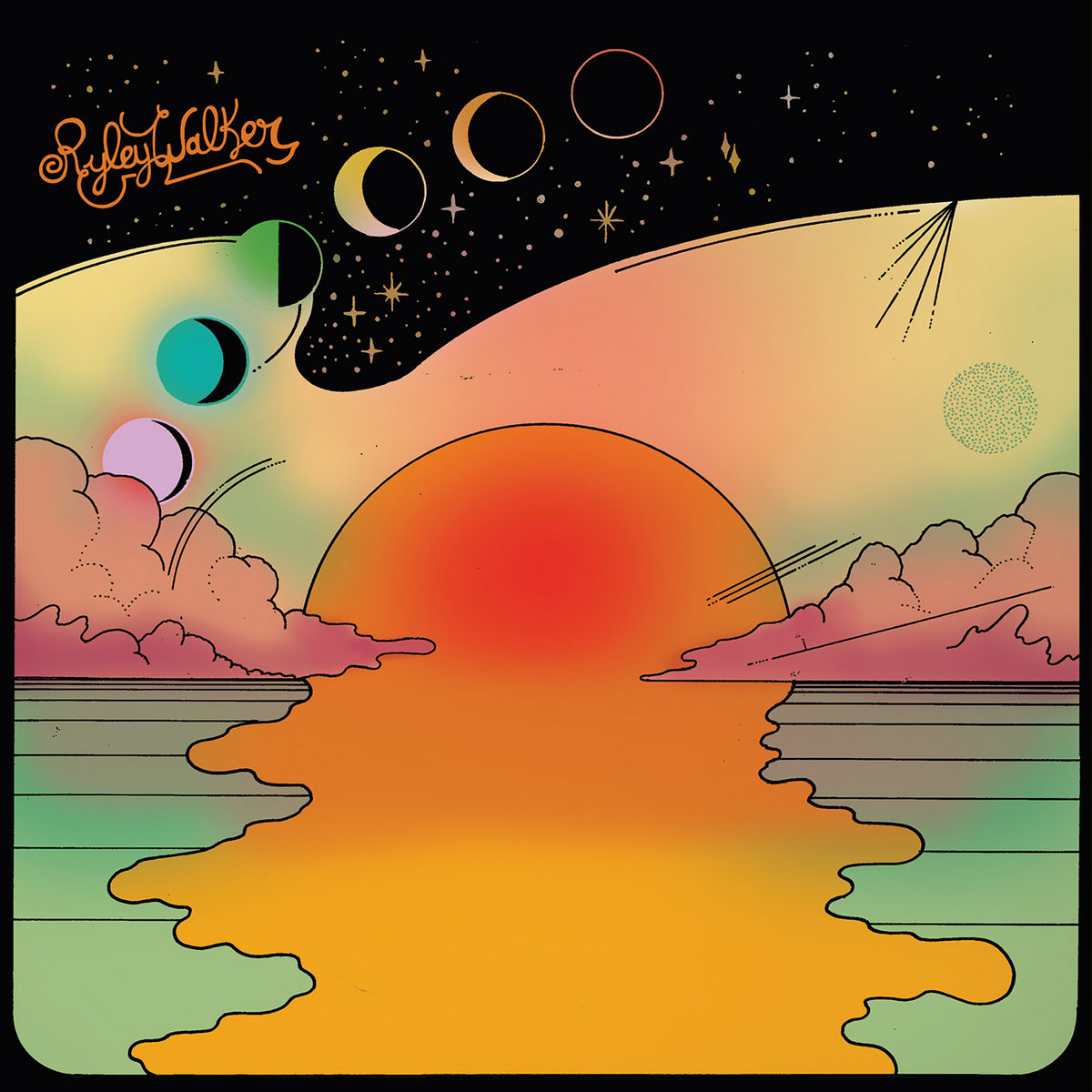
Guitar savant. Petulant and unserious. Genius. Each is a word or phrase describing Ryley Walker, a musical wunderkind from outside of Chicago whose second full length album somehow encapsulates the praises and critiques that have followed him throughout his career. At its best it thrives, with Walker’s intricate guitar play coalescing with a wide, beautiful array of instruments and moods. At its worst, his risks don’t pay off, his jokes fall flat, and he inexplicably strays from convention and areas of strength. Thankfully, the patient critic is rewarded; each additional listen points to another reason to respect his prowess. Or, hell, maybe even love him.

The thought process that a young musician faces when creating a second album is straightforward, albeit daunting, and the unenviable task of having to cope with an identity (either establishing, upholding, or improving) can illicit any number of responses. The sophomore effort, Golden Sings that Have Been Sung, shows flashes of all of the above, but perhaps most importantly offers a fascinating parallelism with Walker’s worldview- a duality of seriousness and triviality, control and helplessness; a competition between intricate beauty and crass ruggedness. This implicit imperfection, shown to be far more prominent than in his debut album, features throughout in the form of an expansion of Walker’s raspy singing voice. The same can be said with the introduction of edgy, grunge-heavy guitar effects in tracks like “Sullen Mind,”, a standout. This marks the most concerted effort yet for Walker to diversify his sound and avoid being pigeon-holed as a typical finger-picking blues/folk guitar player.

Boldly, the eight-song album begins with the best track Walker has ever recorded, purposely titled, “The Halfwit in Me.” A stunning ballad of failures and could-have-beens, the song is underscored by the typically adept melody of expressive guitars, exploding forward from a deliberate attempt at diversification and experimentation of sound. Varied influences of jazz, world music, and psych-rock are a precursor to a continued element of the remainder of the record. Lyrically, the first two songs establish the pairing of opposites that follow Walker around the album. In this case, Walker juxtaposes a hesitant, uncertain self with an unapologetically confident one. “A Choir Apart” begins with a warning of stubbornness “heads up for this joker/ hand on the heart/ pledge to a false flag,” and finishes with much the same “Golden sings that have been sung/ wise ass wisdom, wasted on the young.”

As impressive and intriguing as the album begins, the momentum is lost by a drastic shift downward in pace, serving only to highlight two of Walker’s weaknesses: crawling speed and bold analogy. And, thus, the album finishes with alternations of head-scratching shortcomings and sparkling talent. Among the low points are lines like “Funny thing she said to me/ I could see you giving me a child” and “I’m playing footsie with Jesus”, each feeling awkward and out of context. Herein lies the difficulty with risk and boldness: it doesn’t always pan out. While there is certainly value in efforts to diversify one’s craft, speed and songwriting in this case, Walker’s gifts of rhythm and tempo are too good to ignore, and it’s difficult not to wonder what a more consistent sense of urgency might have yielded.

Writing off the album as a dud would be a bad, bad, mistake, and he leaves no room to wonder with the dense, lush, and aforementioned “Sullen Mind”, a deeply personal tune that shines light on the dark places inside his mind, devoid of hope and prone to disappointment. The repetition of “And with a sullen mind, I’m out of here” is soon washed away by two climaxes of full-blown, eyes closed, head-nodding psychedelia. Two songs later, Walker, fittingly, returns to his roots with the kaleidoscopic tunings of his acoustic guitar, singing of The Roundabout, a literal place of vast memories, and a figurative nod at the tendency to search for the comfort and familiar when all else is lost. His voice, usually unrefined, is clear and smooth, shining in tandem with his meandering finger picking. The refinement is rewarded, the virtuoso is validated, and everything feels like it’ll be alright.


To finish things off, Walker saves the most profound for last, putting together the puzzle that makes the albums symbolism so impressive. Behind a backdrop of world music influences, the slow pace finally seems fitting, and the slow progress is almost a reflection on the journey undertaken. Whether that journey is the album, or even the life of the listener, is entirely uncertain, and for good reason. The record’s final words, “I’m beloved by the loved, who love to love/ I can still cut loose on a weekday night,” cut to the core. The album ends with a shrug of the shoulders. In light and darkness, it takes risks, has flying successes, and comes up short. Nonetheless, it carries forward and tries again. Without sounding zen or philosophical, we’re clued in to Walker’s views of the world. Of what it means to feel alive. Or maybe not to take him so seriously.